
In the field of smart card applications, material selection is no longer just a matter of cost — it directly determines a card’s value, user experience, and long-term brand impact. While traditional PVC cards have long been favored for their low price and mature processing, their limitations are becoming increasingly apparent as demand for premium quality grows. In contrast, RFID metal cards, with their distinctive metallic texture, superior durability, and enhanced security, are rapidly becoming the preferred choice for high-end applications.
This article compares Contactless Metal Cards and Traditional PVC Cards from four critical perspectives: premium appearance, durability, security, and brand expression.
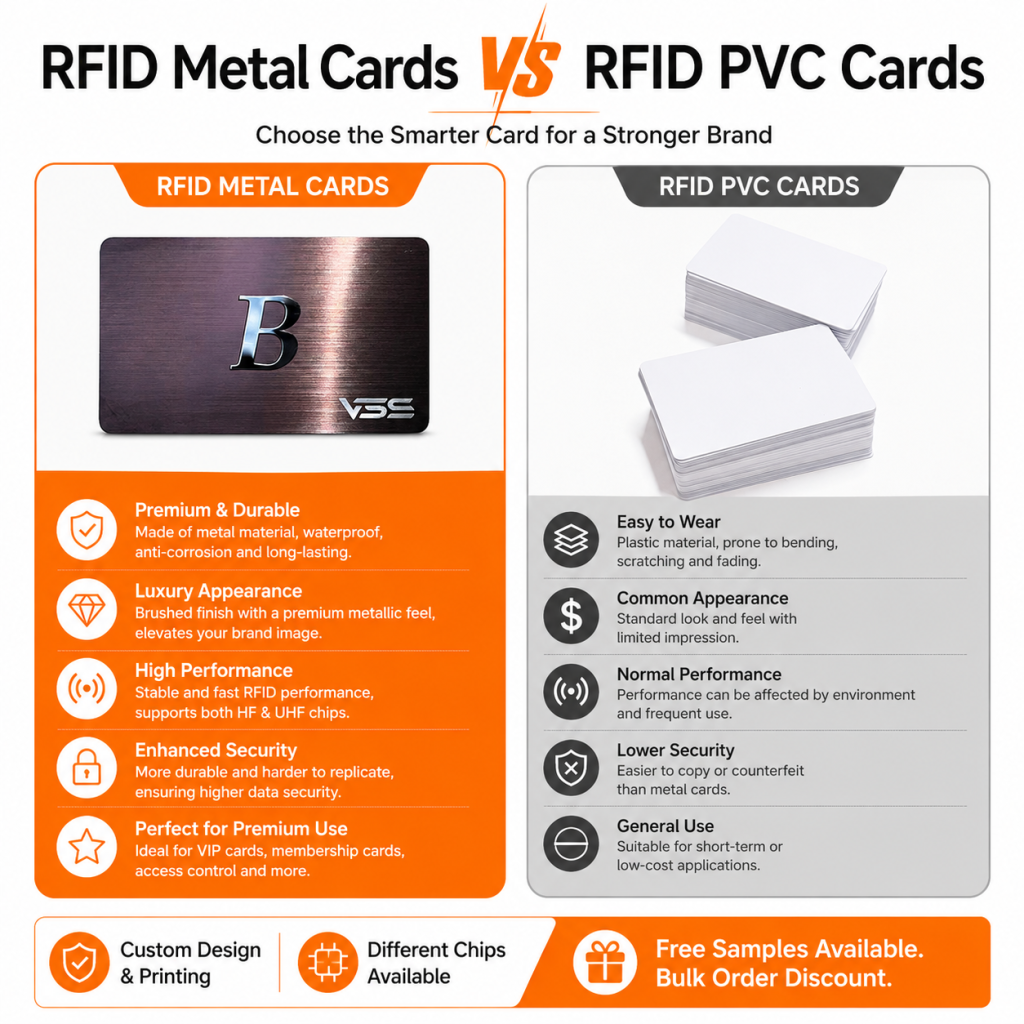
1. Premium Feel & Weight: Elevate Your Brand Image
Contactless Metal Card
A Contactless Metal Card delivers an unmistakably premium experience. Manufactured from stainless steel, brass, aluminum, or titanium materials, the card offers a solid weight, metallic sheen, and refined texture that immediately communicates quality and exclusivity.
Benefits:
*Enhance brand image
*Improve customer perception
*Create memorable user experiences
*Increase customer loyalty
Traditional PVC Card
PVC cards are lightweight and common. Although practical, they provide a relatively ordinary visual and tactile experience. In crowded markets, traditional PVC cards often struggle to differentiate themselves.
2. Durability: Reduce Long-Term Operating Costs
Contactless Metal Card
Metal cards are engineered for longevity. They offer exceptional resistance to: Bending, Scratching, Corrosion, Wear and tear. Most metal RFID cards maintain their premium appearance for more than 10 years.
Traditional PVC Card
PVC cards are more susceptible to environmental damage. Common issues include:
*Yellowing after prolonged use
*Bending and deformation
*Surface coating peeling
*Fading colors
3. Security: Strengthen Customer Trust
Contactless Metal Card
Modern RFID Metal Cards integrate advanced manufacturing techniques with NFC and RFID chip encryption technologies.
Security Features:
*NFC encrypted chips
*Unique UID identification
*Tamper-resistant construction
*Difficult to duplicate
*Enhanced anti-counterfeiting protection
Traditional PVC Card
PVC cards generally use mature and widely available manufacturing technologies. Because production barriers are lower, unauthorized duplication and counterfeiting are relatively easier.
4.Brand Expression: Create a Powerful Visual Identity
Contactless Metal Card
One of the greatest advantages of metal cards is design freedom. Manufacturers can incorporate:
*Laser engraving
*Chemical etching
*Hollow cutouts
*Color filling
*Brushed finishes
*Mirror finishes
*PVD coating
These premium processes transform a card into a miniature piece of brand artwork.
Traditional PVC Card
PVC cards mainly rely on flat printing technologies. Although full-color graphics are possible, their visual impact and tactile appeal remain limited compared with metal cards.
Guangdong Xinye Intelligent Label Co., Ltd. is a professional manufacturer specializing in RFID and NFC solutions, including RFID Metal Cards, NFC Metal Business Cards, PVC Smart Cards, RFID Labels, RFID Tags, NFC Stickers, and customized IoT identification products.With advanced manufacturing equipment, strict quality control systems, and extensive OEM/ODM experience, we provide customized solutions for hotels, membership systems, access control, retail, asset management, anti-counterfeiting, and smart identification applications worldwide. Please feel free to contact us to get sample!