
he rapid evolution of the Internet of Things (IoT) has transformed RFID technology from a simple tracking tool into a strategic asset for global system integrators and brand owners. In today’s high-stakes markets across Europe, North America, and East Asia, the demand for precision, security, and automation has made high-performance RFID labels indispensable. One of the most critical functions is Anti-Counterfeiting and Anti-Diverting, where brands protect their integrity by embedding unique digital identities into products. This ensures that every item can be authenticated throughout the global supply chain, effectively preventing unauthorized distribution (gray market diverting) and protecting premium brand equity for luxury goods, pharmaceuticals, and electronics.
As we move into the consumer-facing environment, Unmanned Retail represents the pinnacle of modern convenience and operational efficiency. By utilizing item-level RFID tagging, smart cabinets and autonomous stores can achieve instantaneous checkout and real-time inventory updates without human intervention, significantly reducing labor costs and eliminating the friction of traditional point-of-sale systems. Beyond the storefront, RFID plays a pivotal role in Personnel and Vehicle Management, providing secure, contactless access control and logistical tracking. High-frequency and ultra-high-frequency (UHF) solutions allow for the seamless monitoring of fleet movements and employee safety in restricted areas, optimizing the flow of assets and people in complex industrial environments.
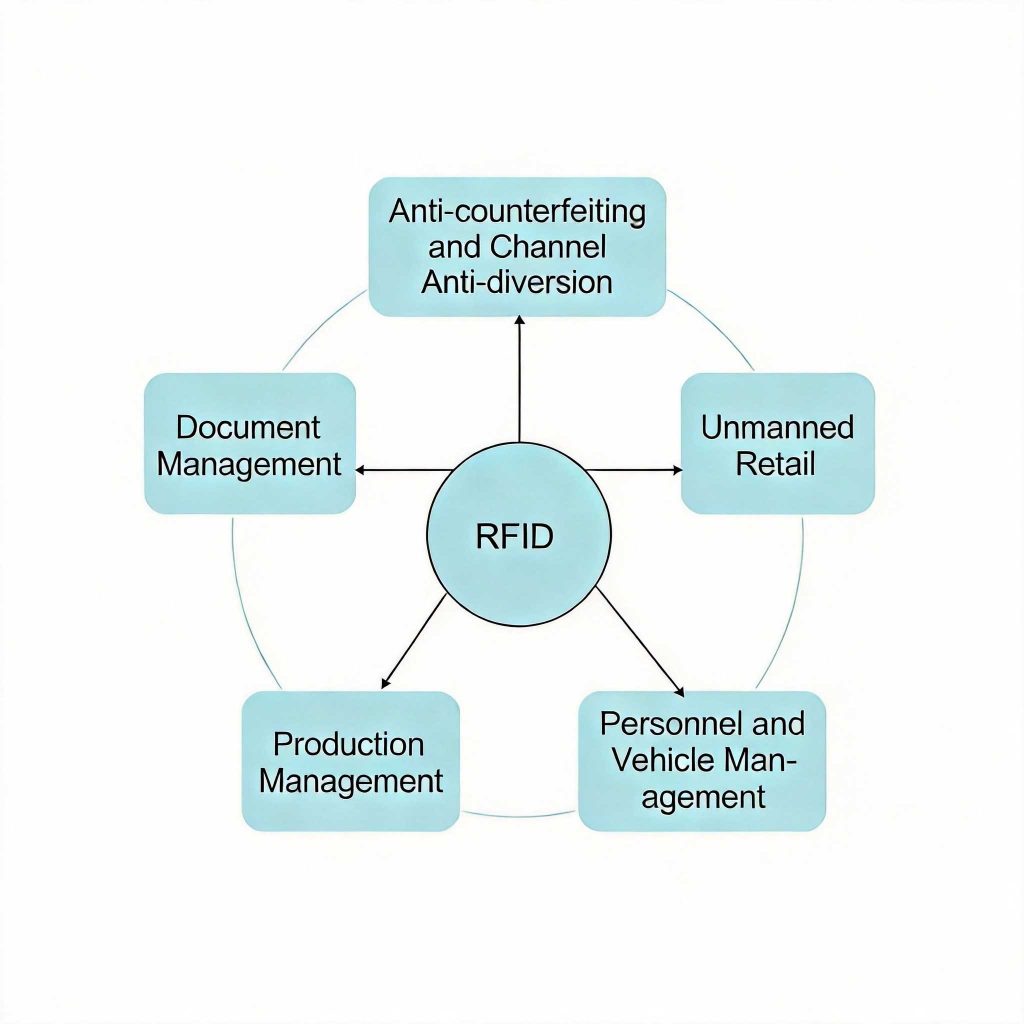
On the factory floor, Production Management is being redefined by the granularity of RFID data. By attaching ruggedized tags to work-in-progress (WIP) components, manufacturers can achieve total transparency in the assembly line, ensuring that every step of the production process is documented, timed, and quality-controlled to meet the rigorous standards of modern manufacturing. This digital thread extends into the administrative realm with Archive Management, where RFID labels allow for the rapid localization and automated auditing of sensitive documents and historical records. This replaces labor-intensive manual filing with a high-speed, error-free digital tracking system that ensures critical information is always accessible and secure.
In conclusion, the future of RFID technology lies in its ability to become more specialized, thinner, and more resilient. As we look toward the next generation of IoT, the integration of flexible anti-metal tags and high-memory chips will further expand the boundaries of what is possible in asset management and intelligent tracking. For system integrators and solution providers, choosing the right manufacturing partner is essential to ensure that every tag performs reliably in diverse global frequencies and harsh environments. Choose Xinye RFID, making your business simpler.