
What is NFC technology?
Near Field Communication, or short range wireless communication technology. Developed by Philips and Sony, NFC is a contactless identification and connectivity technology that enables close range wireless communication between mobile devices, consumer electronics, PCs and smart control tools.
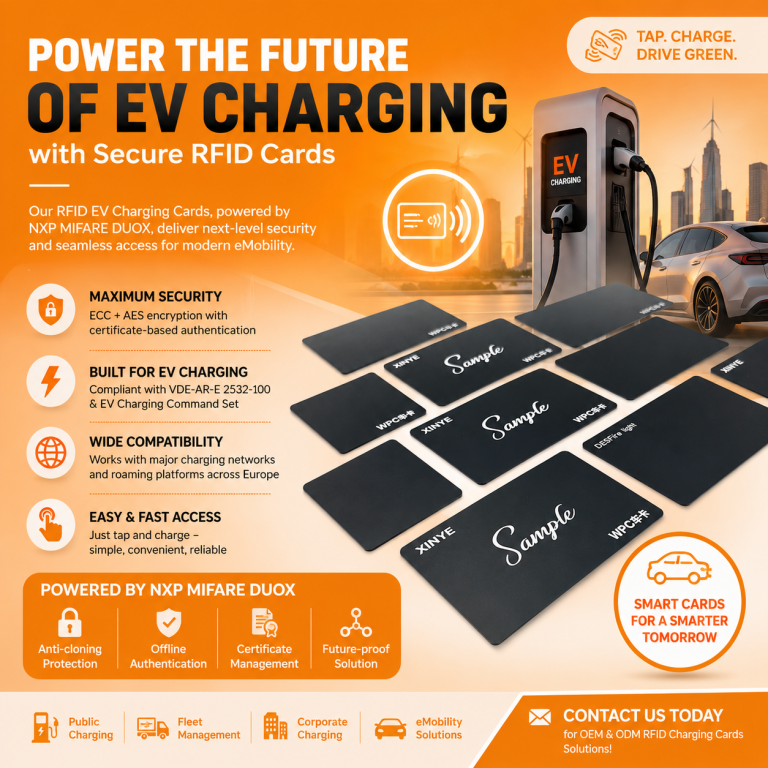
NFC provides a simple, touch-based solution that allows consumers to exchange information and access content and services simply and intuitively. It combines contactless reader, contactless card and peer-to-Peer functionality into a single chip, opening up countless new opportunities for consumer lifestyles.
What difference between NFC and RFID?
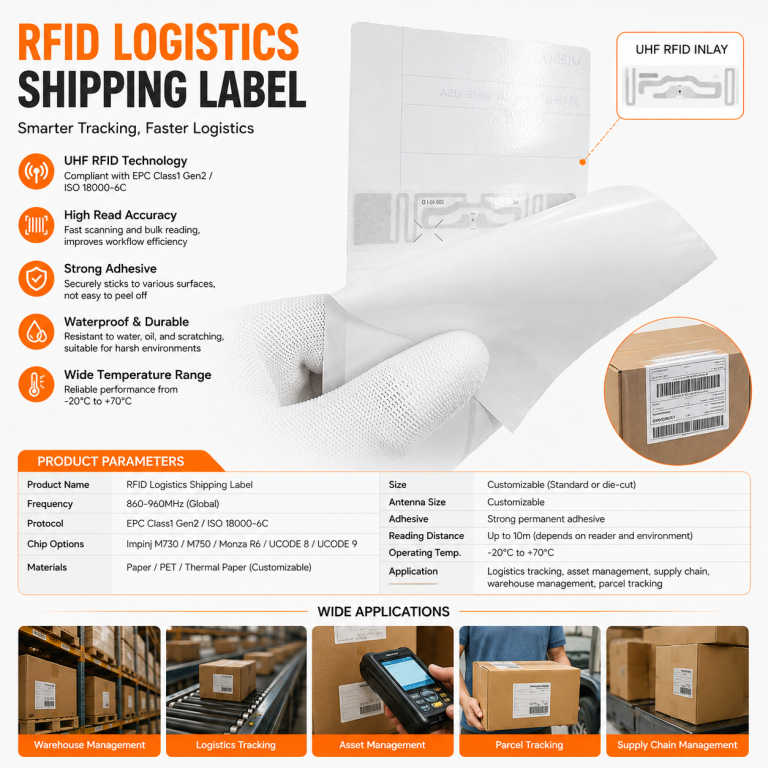
Like RFID, NFC information is transmitted through electromagnetic induction coupling in the radio frequency portion of the spectrum, but there is still a big difference between the two. Understanding these differences is critical to choosing the right technology.
| Comparison item | NFC | RFID |
| Transmission distance | Within 10cm (close range) | A few meters to tens of meters |
| Communication mode | Both-way communication | predominantly unidirectional |
| Standardization | Internationally harmonized standards | Multiple standards coexist |
| Typical application | Access control, payment, data interaction | Logistics, Asset Management, Tracking |
NFC is a wireless connection technology that provides easy, secure, and rapid communication with a smaller transmission range than RFID. RFID transmission range can reach a few meters, or even dozens of meters, but because NFC adopts a unique signal attenuation technology, NFC has the characteristics of short distance, high bandwidth and low energy consumption compared with RFID.
NFC is compatible with existing contactless smart card technology and has become an official standard supported by more and more major vendors. In addition, RFID is more used in production, logistics, tracking, asset management, while NFC plays a huge role in the fields of access control, public transportation, mobile payment, etc.
NFC technical advantages
NFC is not only superior to traditional RFID technology, but also has significant advantages over infrared and Bluetooth transmission methods.
Contrast with infrared
As a consumer-oriented transaction mechanism, NFC is faster, more reliable and much simpler than infrared, and does not have to be tightly aligned to transmit data like infrared. NFC’s touch-based operation greatly reduces the user’s threshold for use.
Comparison with Bluetooth
Compared with Bluetooth, NFC is for short-distance transactions and is suitable for exchanging important data such as financial information or sensitive personal information; Bluetooth can make up for the shortcomings of NFC communication distance and is suitable for long-distance data communication. Therefore, NFC and Bluetooth complement each other and exist together.
In fact, the fast and lightweight NFC protocol can be used to guide the Bluetooth pairing process between two devices, facilitating the use of Bluetooth. This collaborative approach makes NFC a bridge for rapid connectivity.
NFC working mode
NFC devices support two communication modes and three function modes, which can meet the application requirements in different scenarios.
Communication mode
Active Mode
In this mode, the target device and the initiating device have independent power supplies and can transmit signals to each other in turn.
Passive Mode
The initiating device generates a radio signal, and the target device is powered by the electromagnetic field of this signal. The target device responds to the initiating device by modulating the electromagnetic field. This approach allows NFC tags to be extremely small and thin, making them ideal for smart card and tag applications.
Three Functional Modes
NFC can operate under ISO/IEC 18092, NFC IP-1 and ISO/IEC 14443 wireless smart card standards:
Read/Write Mode
In this mode, NFC-enabled devices can read and write any supported tag and read data in the NFC data format standard. This is the most common pattern used in asset tracking and information gathering applications.
Peer-to-Peer mode
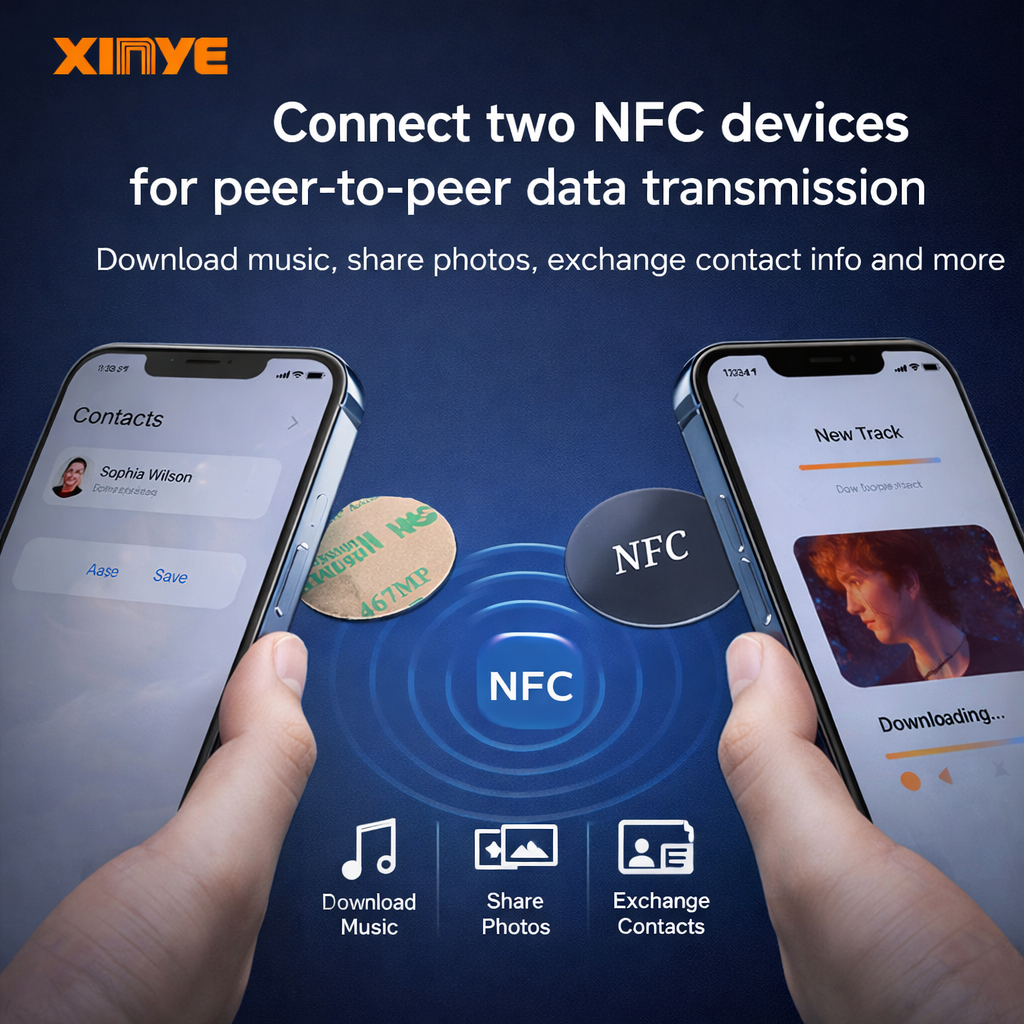
In this mode, two NFC devices can exchange data directly. For example, parameters for enabling Bluetooth or Wi-Fi connections can be shared, virtual business cards or digital photos exchanged, etc. Point-to-point mode complies with ISO/IEC 18092 standard.
Card Emulation Mode
NFC-enabled devices can mimic the functionality of smart cards and be read as tags by other readers. This allows devices such as mobile phones to replace traditional access cards, transportation cards and payment cards.
Five NFC industry application scenarios
NFC technology applications can be divided into five categories, covering a wide range of areas from everyday consumption to enterprise-level solutions:
Touch and Go
This is the most basic and widely used form of NFC. Users can identify the equipment storing tickets or access codes close to the card reader, which can be applied to access control management, tickets and tickets, etc., as well as logistics management and asset tracking.
Touch and Pay
Contactless mobile payments are the most well-known application of NFC. The user can make a payment by placing the device close to a POS machine embedded with an NFC module and confirming the transaction. This payment method is fast and secure and has been widely used worldwide.
Touch and Connect
Connect two NFC devices for peer-to-Peer data transfer, such as downloading music, exchanging pictures and exchanging contacts. This simplifies the pairing process and eliminates the need for complex setup steps.
Touch and Explore
Users can bring NFC devices close to NFC-enabled smart utilities or posters to browse traffic information, advertising content or product details. This provides a whole new way of interacting with offline marketing and messaging.
Download and Touch
Users can receive or download information through the network for payment or access control functions. For example, a user may send a message in a particular format to a designated device to control its access to a particular area. This approach combines remote authorization with near-field interaction.
NFC, as a mature near field communication technology, is rapidly spreading around the world. Whether it’s access control, mobile payments, asset tracking, or smart marketing, NFC shows great application potential. With the in-depth development of the Internet of Things and digital transformation, NFC will work in conjunction with other wireless technologies to create more value for businesses and consumers.
Xinye RFID as a professional RFID/NFC product supplier, we are committed to providing customers with high-quality smart card and smart label solutions to help your business innovation and digital transformation. If you have any questions about NFC technology or products, feel free to contact us.