
RFID Card Material Comparison at a Glance
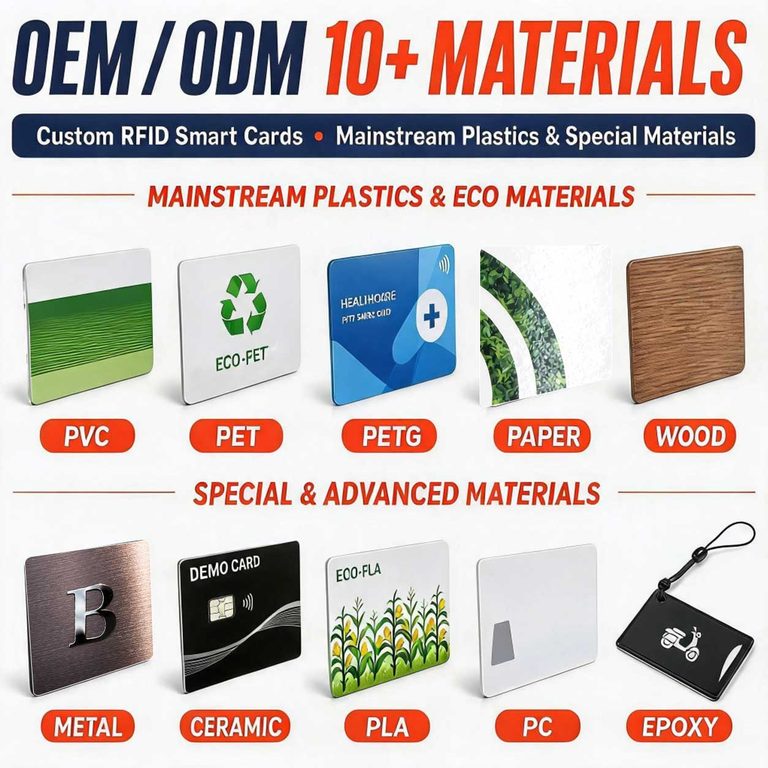
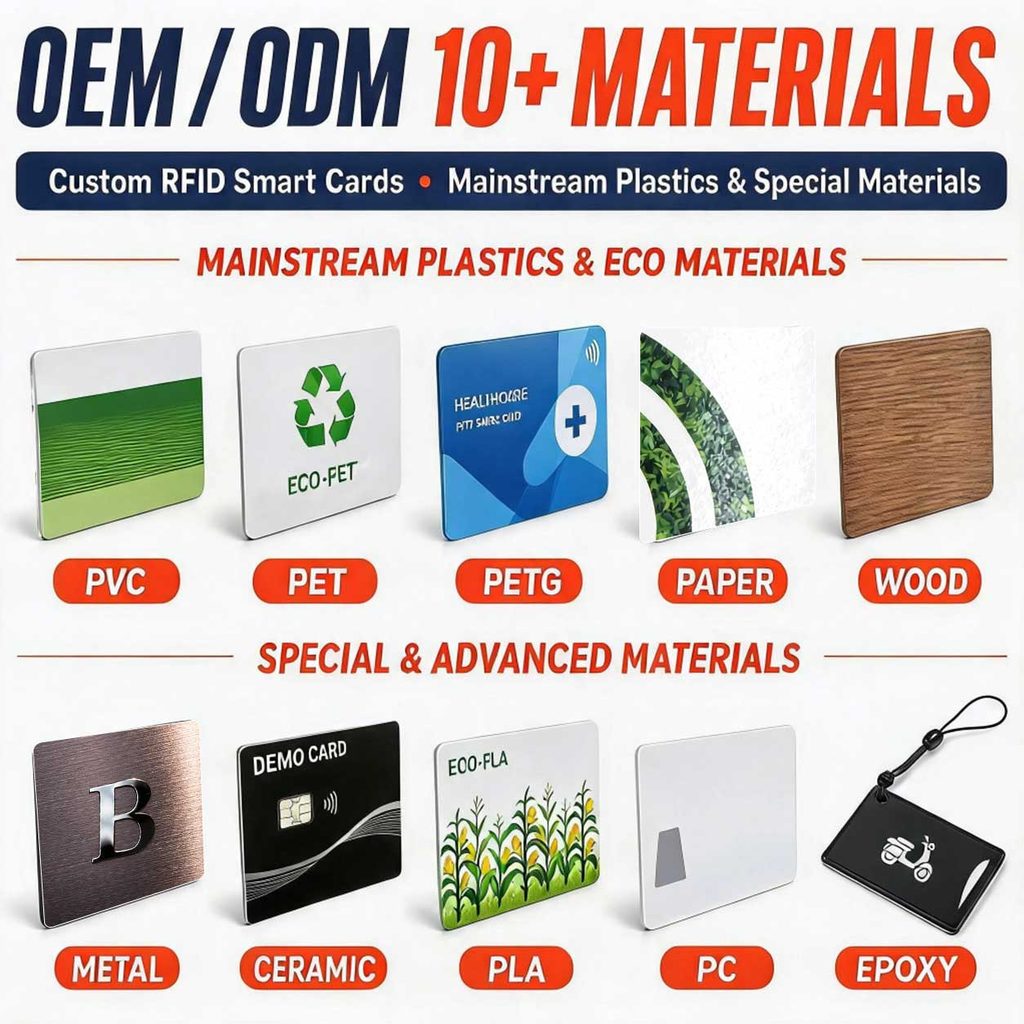
There is no universal best material. PVC is a practical general-purpose option, PC is suitable for demanding identification applications, PET and PETG offer alternative construction options, metal is suitable for premium designs with a metal-compatible RF structure, and wood, bamboo, paper, or PLA may be better for specific appearance, sustainability, or usage requirements.
| Material | Main strengths | Common applications | Key considerations |
|---|---|---|---|
| PVC | Cost-effective, versatile, easy to print | Hotel key cards, membership cards, access cards, loyalty cards, gift cards | A strong general-purpose option; confirm the required durability and sustainability specification |
| PET | Durable and flexible card construction | Transportation cards, reusable ID cards, promotional cards | Select according to the required structure, finishing, and production process |
| PETG | Flexible processing and forming options | Custom NFC cards, promotional cards, membership cards, special designs | Confirm the forming, surface, and printing requirements before production |
| PC | High durability and dimensional stability | Employee IDs, secure IDs, long-term access cards | Usually selected when impact resistance and service life are important |
| Recycled PVC | Uses recycled PVC content | Sustainable membership, loyalty, corporate ID, and promotional programs | Request documentation for recycled content and applicable claims |
| PLA | Bio-based plastic option | Eco-conscious promotional and marketing cards | Do not assume home compostability or biodegradability; disposal conditions matter |
| Wood | Natural texture and premium appearance | Luxury membership cards, premium hotel cards, gift cards, collectible cards | Wood species, thickness, surface treatment, and antenna integration affect the result |
| Bamboo | Distinctive natural appearance | Eco-themed membership, hotel, corporate gift, and promotional cards | Grain, material construction, and finishing can vary |
| Paper | Lightweight and suitable for short-term use | Event tickets, temporary IDs, disposable access cards, campaigns | Add protection when moisture resistance or repeated handling is required |
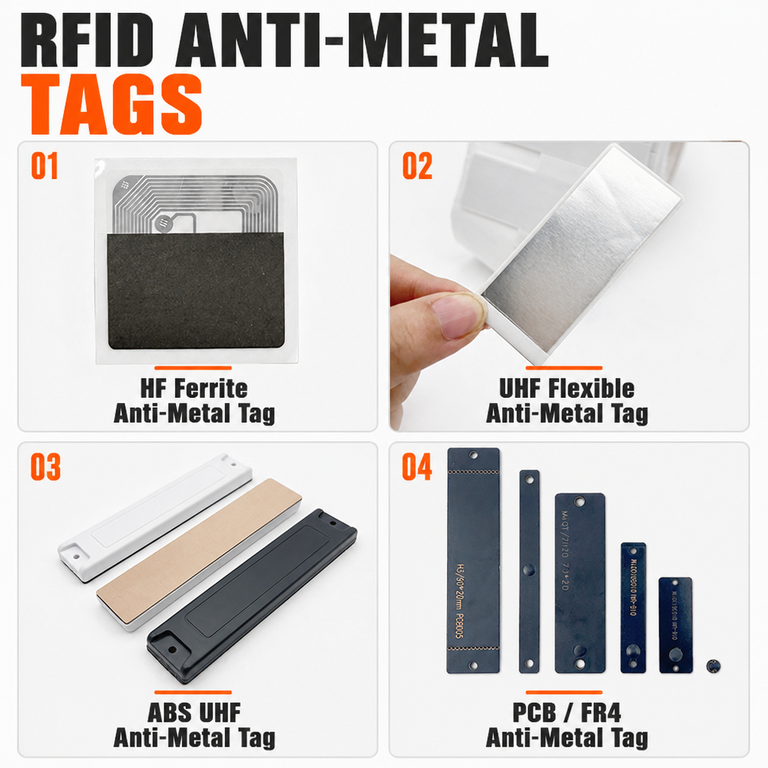
| Metal | Premium appearance, rigid construction, and strong physical durability | Premium membership cards, business cards, hotel key cards, access cards, luxury promotional cards | Standard metal can interfere with RF performance; use a metal-compatible inlay or engineered non-metal RF window |
How Does Material Affect RFID or NFC Performance?
The material is only one part of the card system. RFID and NFC performance also depends on:
- Chip type and operating frequency
- Antenna geometry and placement
- Inlay design
- Card thickness and layer structure
- Nearby metal or other interference
- Reader and encoding requirements
- Surface treatment and manufacturing tolerances
NFC Forum information describes NFC as a short-range communication technology operating at 13.56 MHz. For contactless card programs, the selected chip and antenna should be validated in the final card structure rather than tested only as a loose inlay.
Custom RFID and NFC Card Manufacturing by XINYE RFID
XINYE RFID supports OEM and ODM customization for RFID and NFC cards across different materials and applications. A typical development process includes:
Mass production: Produce the approved RFID or NFC card specification at the required volume.
Material selection: Compare PVC, PET, PETG, PC, recycled PVC, PLA, metal, wood, bamboo, or paper according to the application.
Chip selection: Select the chip based on frequency, reading requirements, memory, security, and encoding needs.
Card design: Confirm dimensions, artwork, printing, finishing, and any additional features.
Inlay and antenna integration: Validate the antenna position and card construction with the selected chip.
Data encoding: Encode UID-related information, URLs, QR codes, or other customized data when required.
Sample approval: Check appearance, dimensions, print quality, read performance, and encoded data.
Quality inspection: Verify visual quality, card dimensions, chip functionality, and encoding results.