
As global distribution networks expand and brand value grows, the risks of counterfeiting and cross-regional product diversion have become increasingly severe. RFID tags—especially high-frequency (HF) and NFC tags—are emerging as a core technology for brands seeking to build robust anti-counterfeiting and anti-diversion systems, thanks to their unique identification codes (UID/TID) and encrypted data storage capabilities. A complete RFID-based anti-counterfeiting and anti-diversion platform typically consists of three components: RFID/NFC anti-counterfeiting tags attached to products, reading devices such as NFC-enabled smartphones or dedicated readers, and a backend system responsible for data processing and decision-making.
Every RFID tag contains a globally unique UID or TID that cannot be copied or tampered with. In practice, brand owners can write production information and intended distribution channel data into the tag, or generate a unique verification code based on the UID/TID using a specific algorithm, and then store it in the tag. The advantage of this approach is that any subsequent scan can authenticate the product by comparing the UID, TID, or verification code. Simultaneously, the backend system can analyze the product’s circulation history to detect cross-regional diversion.
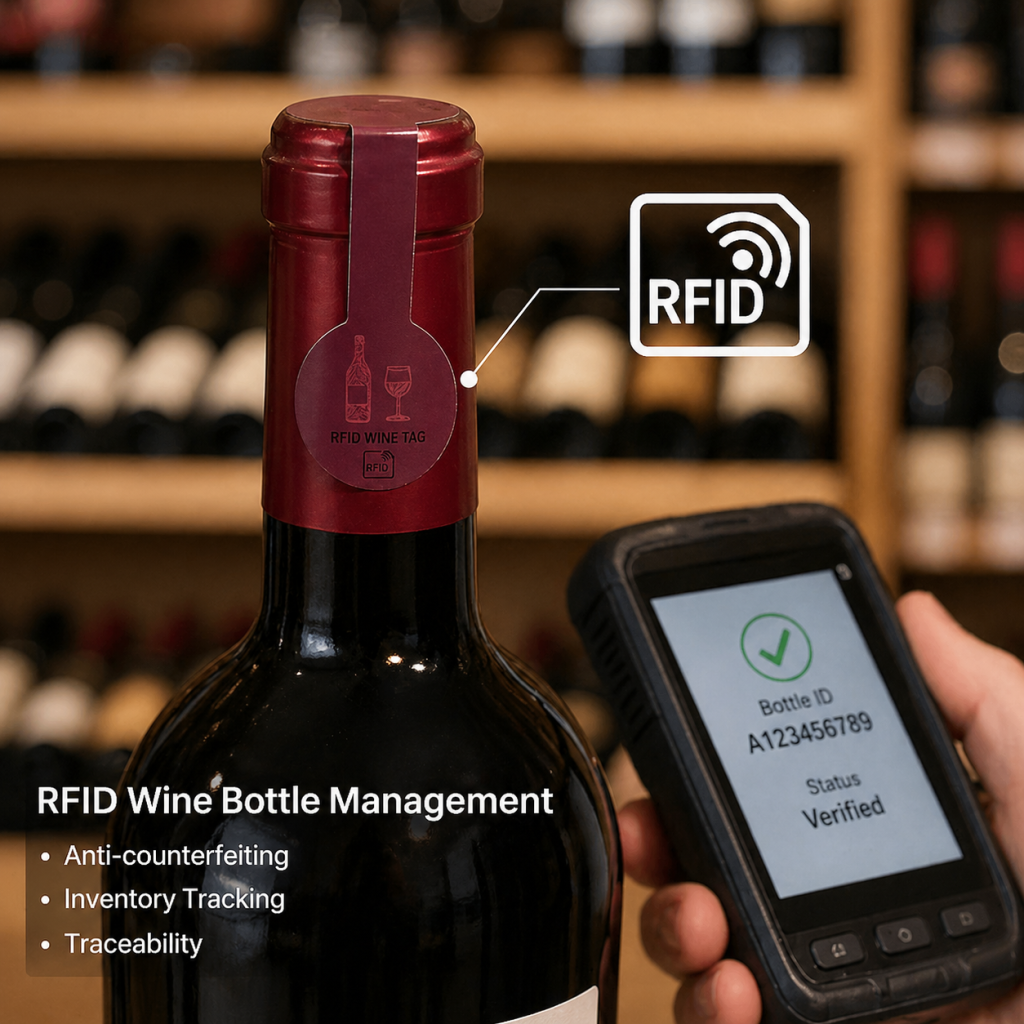
A typical high-frequency anti-counterfeiting platform operates as follows. First, manufacturers use a secure vendor key to write product information—such as batch number, production date, and authorized channel—into the NFC anti-counterfeiting tag attached to the product. This data is also synchronized to the anti-counterfeiting platform. Later, different users querying the system receive different levels of information. Industry regulators can access full manufacturer records; distributors can verify whether a product is authorized for sale in their region; and consumers can simply tap the NFC tag with their smartphones to retrieve traceability and authenticity results. Throughout the process, the backend system not only stores data but also detects diversion—when a product is repeatedly read outside its authorized region, the system automatically triggers alerts for market supervision personnel.
Notably, this system requires no complex dedicated equipment. For consumers and field inspectors, an NFC-enabled smartphone is sufficient to complete the entire loop of tag reading, data submission, and result retrieval. This lightweight model—allowing anyone to verify authenticity anytime and enabling real-time alerts—dramatically improves anti-counterfeiting efficiency while significantly reducing brand owners’ market monitoring costs.